A New Mentoring Platform for K-12 Districts
Researching how districts manage coaching programs and identifying opportunities to improve coaching quality at scale.
ROLE
Senior UX Researcher
METHODS
Mixed-method 1:1 Interviews + Moderated Prototype Walkthroughs
TOOLS
User Interviews recruitment
Zoom sessions
Figma prototype
Dovetail analysis
LucidSpark white-boarding
PARTICIPANTS
Instructional Coaches, District Mentorship Leaders
I — PROBLEM
The challenge
In Spring 2026, PowerSchool was exploring a new platform to support the mentorship and instructional coaching of teachers. The concept would allow meetings between mentors and their mentees to be transcribed and summarized by AI, greatly reducing their manual documentation burden.
The team had early prototypes and validated customer desire for the concept, but needed to understand the extent to which the designs could accommodate real, varied coaching practices.
My goals were to get feedback on the prototype and identify opportunities to push its design and value further.
II — METHOD
How I approached it
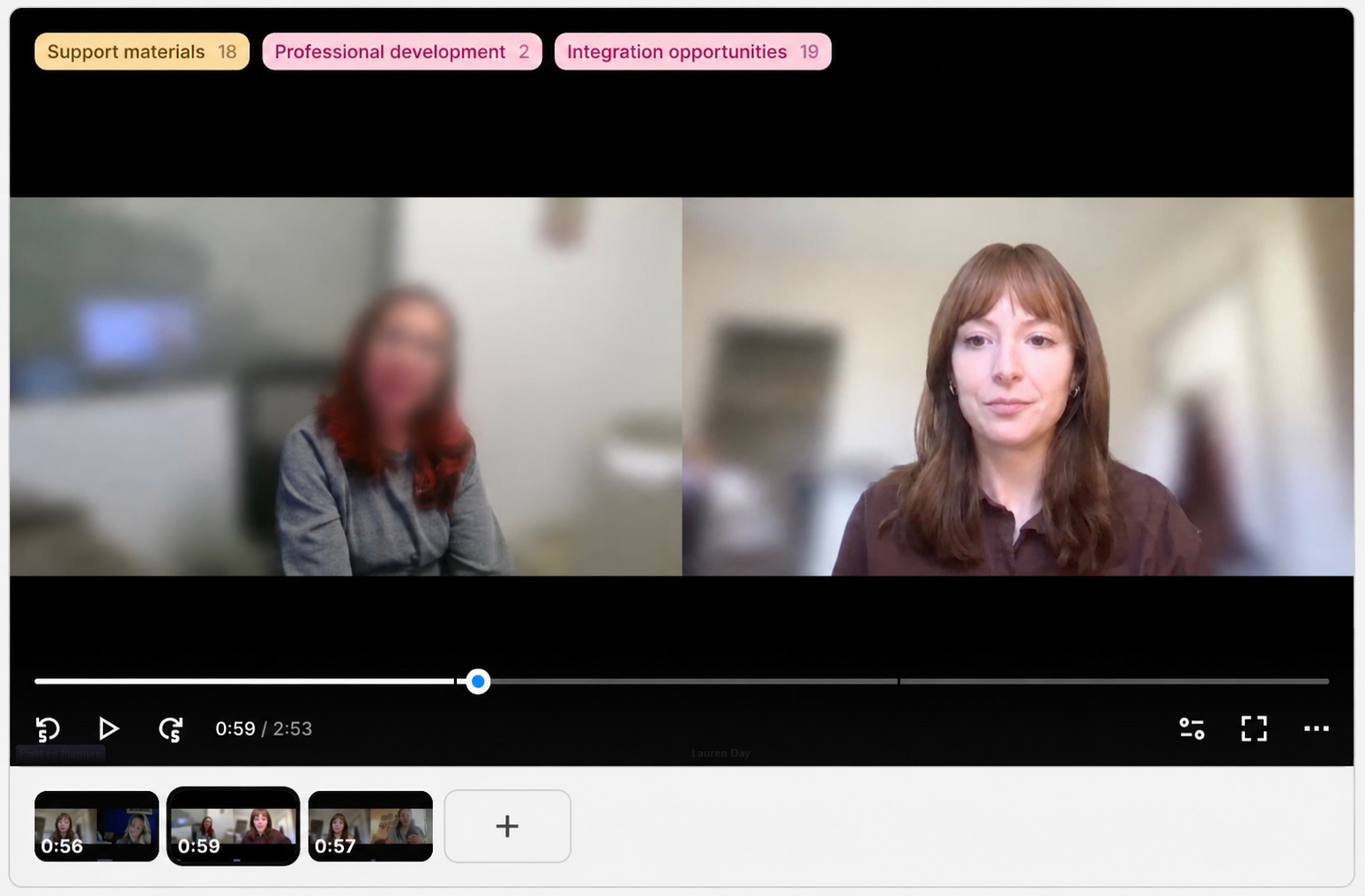
9 in-depth interviews and prototype walkthroughs with coaches, mentors, educators, and district leaders across districts of varying size and maturity.
Sessions paired discovery questions about current coaching practices with structured concept reactions to early product directions.
III — KEY INSIGHTS
What I learned
Districts struggle to enforce consistency and adherence to best practices across their coaching program .
District leaders described significant investments in coaching frameworks, best practices, and mentor training to align with their preferred philosophy, noting how challenging it is to prevent mid-coaching drop off and ensure consistency of approach across the district.
At the same time, participants described substantial variation in how coaching cycles are structured, how goals are managed, and how success is measured.
This revealed a core product challenge: districts want consistency, but no single workflow represents how all districts operate.
01
RECOMMENDATION
Support varied coaching workflows via administrator-defined templates.
Templates with these pre-defined coaching steps and goals that align with district priorities would enforce consistency and inform coaches of what is expected of them.
02
Districts have developed complex, homegrown solutions over time.
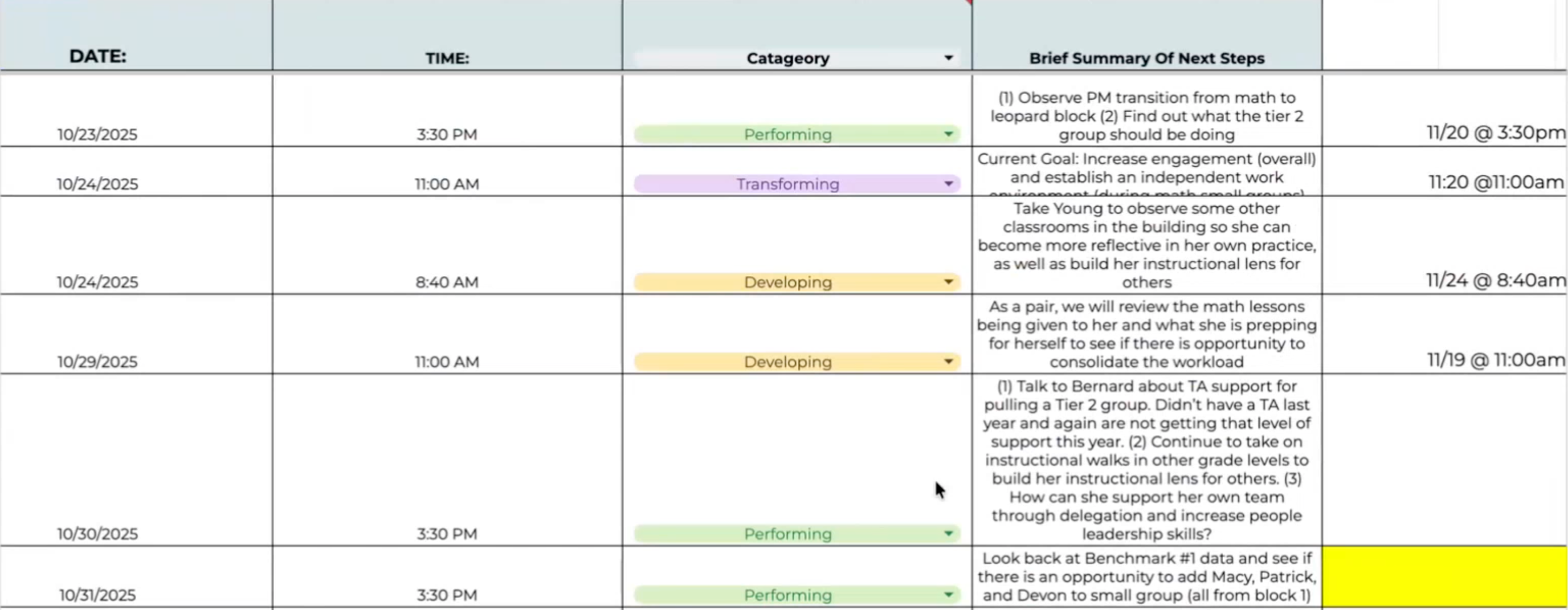
Participants rely on spreadsheets, forms, and homegrown systems to manage coaching. Over time, especially with forms, these tools have evolved to meet highly specific district needs.
Solutions that cannot support comparable data capture risk being seen as a step backward, even if they offer more advanced capabilities. This raises the challenge of how to accommodate these practices without adding unnecessary complexity.
Participants’ artifacts also revealed key priorities, including quickly recalling past work and tracking next steps.
Need-based, tiered approaches to mentorship further highlighted the need for flexible templates to support different coaching strategies.
RECOMMENDATION
Prioritize visibility of recent activity and action items on the mentee profile page for quick, ongoing reference.
Explore ways to accommodate custom district forms; the research suggests these could be incorporated as steps within the coaching cycle, potentially configured during template creation to support more consistent data capture.
Districts’ primary motivation is to provide impactful coaching that retains teachers and improves student outcomes.
The prototype’s early concept of a dashboard highlighting key coaching metrics drove conversations about what districts truly need: the ability to connect coaching efforts to teacher retention and student outcomes.
Conversations about AI’s role in the concept highlighted participants’ interest in ways that AI could support mentors, not just mentees.
03
RECOMMENDATION
Use AI to support coaching quality through meeting transcript analysis, so it can generate goals, next steps, and coaching guidance rooted in context.
Work toward integration with student outcomes data from our Student Information System product to facilitate districts’ decision-making via outcomes-focused reporting or dashboards. Teacher retention data should also be explored via integration with the Employee Records HR product.
IV — ALIGNMENT
What I brought to the team
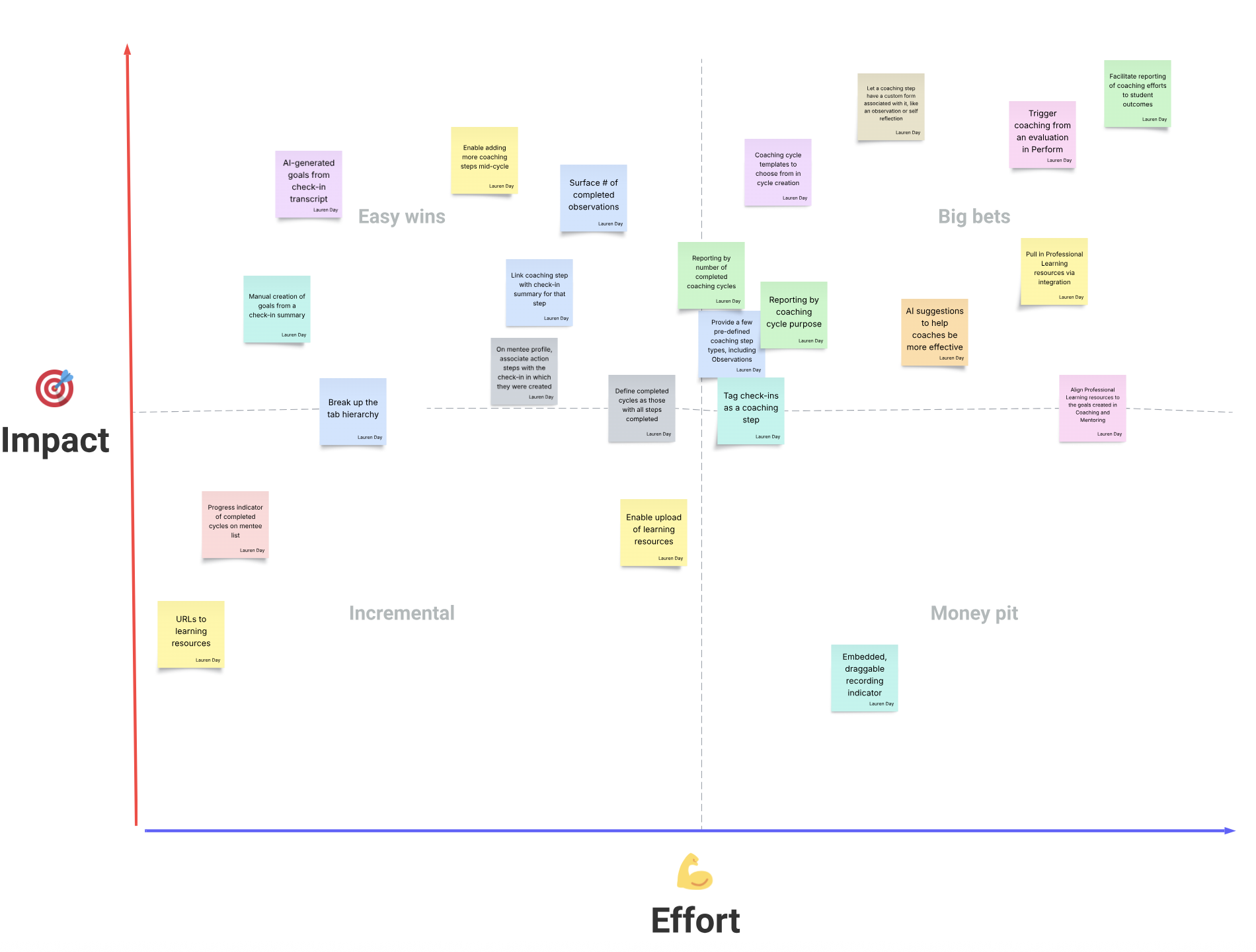
Moving from findings to execution, I facilitated the following prioritization white-boarding exercise with Product, Engineering, and UX.
Together, we mapped the research recommendations on a matrix of engineering effort vs. user value, creating alignment on MVP scope and a shared buy-in on what to build for the short and long term.
V — PRODUCT IMPACT
What resulted from this research
Validated what was working well in the prototype while providing targeted design recommendations to improve user understanding and usability.
01
A cross-functionally agreed-upon set of near-term MVP requirements driven by research recommendations.
02
Enhanced understanding of what would drive value long-term by uncovering prospective customers’ primary motivations, including clearer direction for strategic AI applications in the product.