Understanding the Modern Student Experience
Researching student routines, technology habits, and learning behaviors to inform product design
Role
Senior UX Researcher
Methods
In-depth interviews, journey mapping, persona development, thematic analysis
Tools
User Interviews, Dovetail, PowerPoint, Zoom sessions
Participants
Students ages 10–17
I — PROBLEM
The challenge
As PowerSchool expanded student-facing experiences, teams needed a shared understanding of students’ daily lives, technology habits, motivations, and challenges. Existing knowledge was fragmented, making it difficult to design products grounded in the realities of how students learn, communicate, and manage schoolwork.
II — METHOD
How I approached it
I conducted in-depth interviews with students ages 10–17 to understand how they navigate school, technology, extracurricular activities, and social life throughout a typical day.
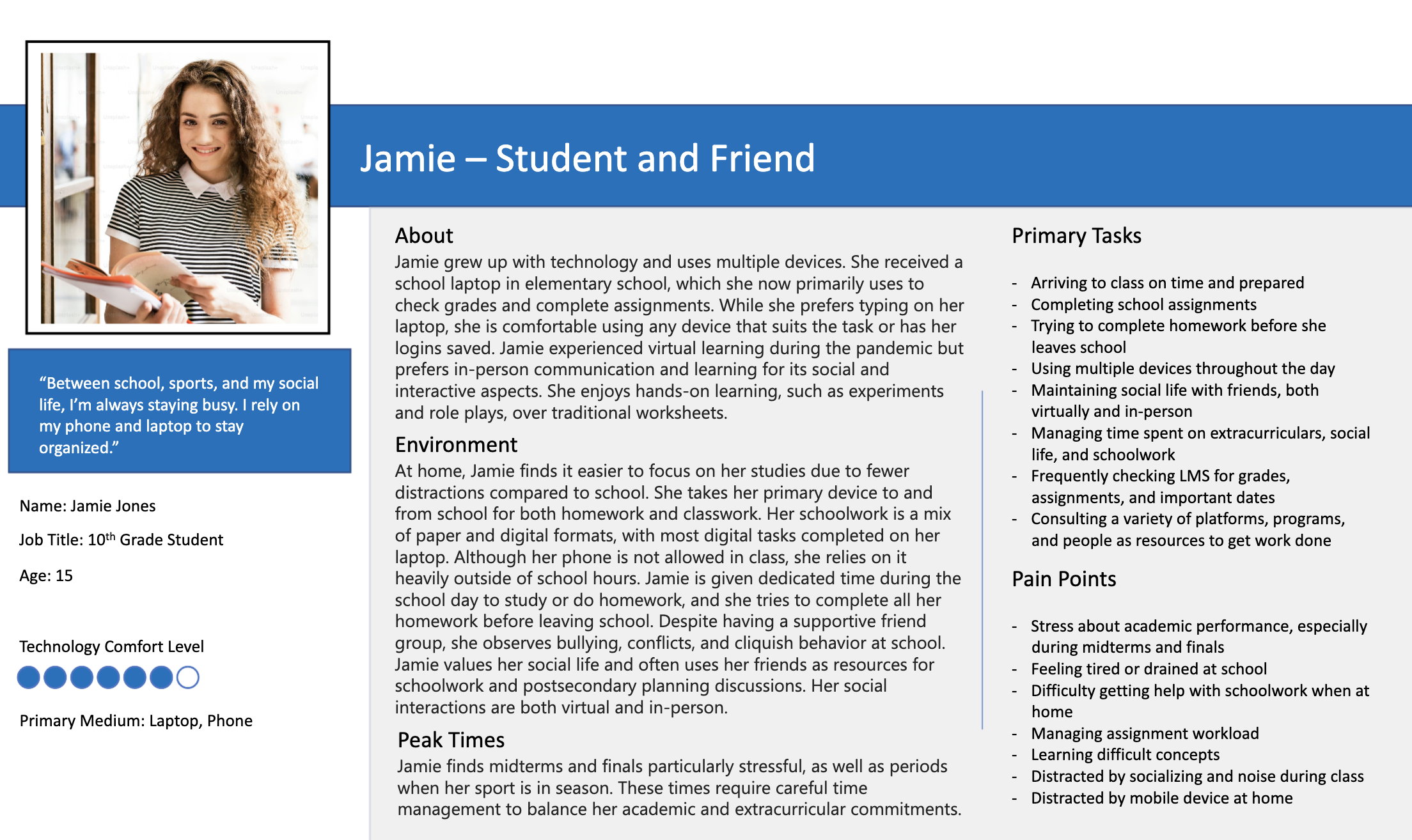
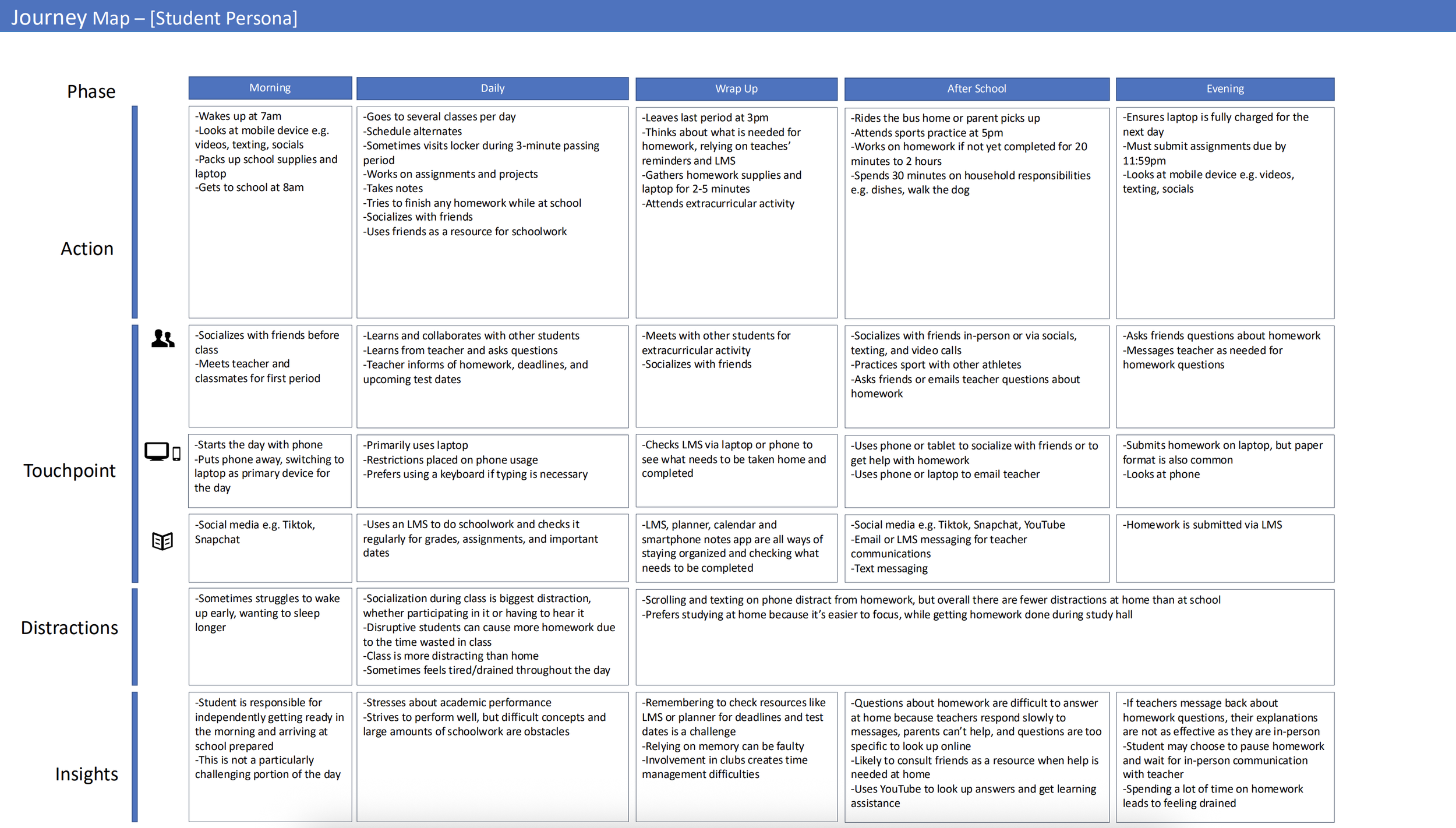
The findings were synthesized into a student persona and journey map that documented daily routines, technology touchpoints, communication patterns, distractions, motivations, and challenges. These artifacts were designed to create a shared understanding of student experiences and serve as a reference for future student-facing product work.
III - KEY INSIGHTS
What I learned
01
Students navigate a complex ecosystem of devices, platforms, and people.
Students move between laptops, phones, learning platforms, teachers, parents, and peers throughout the day, often relying on multiple resources to complete schoolwork and stay organized.
02
Learning extends far beyond the classroom.
Students balance assignments, extracurricular activities, household responsibilities, and social commitments while managing academic expectations. Educational experiences are shaped as much by what happens after school as what happens during it.
03
Students rely heavily on social networks to overcome learning challenges.
Peers frequently serve as a source of academic support, helping students answer questions, clarify assignments, and navigate obstacles when teachers are unavailable.
IV - ALIGNMENT
What I brought to the team
I translated individual student interviews into a shared framework for understanding learner behavior.
By synthesizing student routines, motivations, technology habits, and challenges into a persona and journey map, I created foundational artifacts that helped teams evaluate ideas through the lens of real student experiences rather than assumptions.
What resulted from this research
Established a shared understanding of student users.
The persona and journey map created a centralized reference for understanding student behaviors, motivations, technology usage, and daily routines.
01
Informed future student-facing design decisions.
Teams used the artifacts to ground discussions, evaluate concepts, and consider how new experiences would fit into students’ existing workflows and habits.
02
Created a foundation for ongoing student research.
The work provided a baseline understanding of student needs and ensured student perspectives could be represented alongside those of educators and administrators in future product discussions.